< Back to Blog Home

Geoff Livingston Welcomes Us to the Fifth Estate


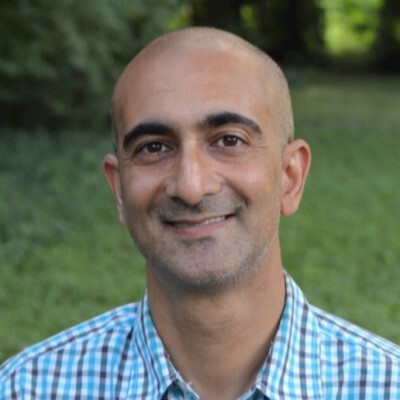
Geoff Livingston is an artist. He’s a writer, a photographer, and an advocate of change for the social good. He’s also a night owl. With this social media enterprise founder and public relations strategist recently releasing his latest book on shelves, sites, Nooks and Kindles across the nation, now was the perfect time to reach him in his native habitat. So, we drank our espressos, power napped and asked all the questions we thought you would love answered – about Geoff and his latest book, Welcome to the Fifth Estate.

Hi Geoff! Thanks for your time today (or should we say tonight?). For those of us who aren’t following you on Twitter or avid readers of your blog, would you share a bit about yourself?

Hmmm. I never really enjoy doing this. I started Zoetica, a social enterprise that provides communications services to companies engaged in social good and nonprofits. I love baseball. My 7-month old daughter Soleil rocks my world everyday. I love photography, but have not done much of it since Soleil came into the world. When she gets bigger… And I love to write.

What prompted you to write this book?

I think most of today’s books on social media are using outdated theory from four or five years ago. My experience helping dozens of clients with actual social media work tells me that there is more to community management and grassroots development than what we are seeing. I decided to put those ideas out into the marketplace. So far the latter half of the book, strategy through sustainability, is being met with nods to flat out acknowledgement of new social media theories.

How has social media strategy influenced you?

I am not sure social media strategy has influenced me. Brand strategy influences me. I got taught strategy by a guy named Ellis Pines at TMP Worldwide. He in turn learned it at the Leo Burnett agency.  Folks like David Ogilvy were the originators of this type of strategy.  Later on, I came to appreciate the classic, like the Art of War and The Book of Five Rings. The strategy we practice at Zoetica is a direct descendant of these influences, and can be applied to any medium.

Your first book, Now Is Gone, was recognized as one of the first books depicting the social media revolution. How do you top yourself with this second book?

That’s easy: Experience. We had hopes and dreams and thoughts about conversations and what it would mean for businesses and nonprofits. Five years later there is experience. I’ve had a great run with a lot of fantastic brands, including work with Google, PayPal, the United Way of America, the Case Foundation, the Environmental Defense Fund, Godsmack Lead Singer Sully Erna (back when Myspace was cool), and on and on. These experiences have provided a pretty good sense of what works and what is hyperbole. Hopefully, the book communicates both.

You have a wealth of great examples of successful media strategies in your book. How did you go about selecting those cases?

Some of the case studies are familiar names like Dell and charity: water (both with new wrinkles); others are relatively unknowns like Miriam’s Kitchen and Samuel Gordons Jewelers. I intentionally chose one nonprofit and one corporate case study for each chapter. There is a balance of large and small brands. The purpose was dual-fold, highlighting the universal themes of social across organization types, and to expose people to new experiences regardless of which side of the fence they sit on.

You talk a lot about community. Can you give an example of what community means to you?

A community is a group of people who share a common interest. Those people may or may not be in a company or organization. Most are not; however those brands certainly have a role in the larger ecosystem usually providing some sort of service or product that seeks to benefit that community. My favorite community in that sense – and it has been for a couple of years – is the LIVESTRONG community. It is amazing. People come to that Facebook page and web site and convene, help each other, fundraise and advocate all in the name of conquering cancer. LIVESTRONG does a great job of facilitating (not dominating) that community and is also a supportive and active participant. In essence, they are a gracious host. The community members  are blood loyal, and they number well over a million people. They stick together through the hard times, including personal trials and some of the more recent stories about Lance Armstrong.

LIVESTRONG is an amazing example of a successful community. In a few words, what are the key ingredients to crafting a community like this?

The secret sauce includes real authentic interaction that includes several voices across the organization. Further, they empower their community to do things, from uploading photos on the Facebook page to participating in bike rices via Gowalla to grassroots fundraising. They let people be people, and be a part of the LIVESTRONG brand.

Final question: In addition to community managers, who do you feel would benefit most from your book?

Their bosses. Seriously, social doesn’t work without executive buy in. Hopefully this book helps get those executives over the hump.  It does provide more business language and sense than the typical finger wagging “this is the way social is” type of book.

-30-

We want to send a hearty thank you out to Geoff for sharing his time with us. Those are some inspirational words around creating community and a strong social strategy. Geoff’s blog encourages reader questions, disagreements, and dialogue to push the envelope and think. In that spirit, we wanted to encourage the same approach. Please share your favorite community best practice with us in the comments section. We will be choosing three winners from our comments, and sending them a free copy of Welcome to the Fifth Estate. Ready, set, go!

Note: Photos used with permission


Tags: , , , , , , , ,

About the author Amanda Nelson is a Community Content Manager at Radian6. She is an avid writer, content curator and border collie fanatic.


8 Responses to “Geoff Livingston Welcomes Us to the Fifth Estate”

  1. @debworks says:

    One of our most used and most successful best practice is to remember to work your plan in real life too. We create events that require we get out in our real community and involve people not connected online. It's too easy to stay in your head and not get out in the real world. We encourage working the streets and involving both our online community and our real community in changing our world.

    • amandanelson13 says:

      Congratulations – you are selected to receive a free copy of Geoff Livingston's book, Welcome to the Fifth Estate. Can you email me your mailing address so we can get you the book? My email is amanda.nelson@radian6.com. Thanks!

  2. @Adgenius says:

    Identify your Brand Advocates (via monitoring and funnels), and engage them to fuel the conversation. Start small and grow steady. Quality tops quantity. Also KISS: make it easy to participate.

    (of course, do not forget the strategy part: objectifs, target groups, resources, responsabilities et al.)

    Looking forward to the book!

  3. @ifdyperez says:

    Ditto! I think it's hard for the "old school" to break with their habits and realize that the public no longer blindly trusts in institutions anymore. We can't be told what to do or what's right or wrong; we prefer to find out for ourselves. And the best way is to have genuine interaction with people from the organization. It's a "we no longer work for them but they work for us"-type of deal now, and companies/organizations need to realize that. Honesty and interaction are key to making a change. Kudos, Geoff!

  4. jakrose says:

    So what does the title mean? Where does the term "The 5th Estate" come from? #curious

    • @geoffliving says:

      From Wikiepedia (I play off both theories)…

      Media researcher Stephen D. Cooper argues that bloggers are the Fifth Estate.[3] William Dutton has argued that the Fifth Estate is not simply the blogging community, nor an extension of the media, but 'networked individuals' enabled by the Internet in ways that can hold the other estates accountable. [4]

  5. @tab_b says:

    Sounds like a fantastic read. I love the answer to the last question – I couldn't agree more. You can't move forward unless the execs at the top "get it".

  6. @Adgenius says:

    This is great. Thank you Amanda & Geoff!

Leave a Reply

Facebook Twitter YouTube Google+ Slideshare
Radian6 Subscribe

Radian6

radian6's Channel

Tell us a bit about yourself to begin your download

* Denotes a Mandatory Field

Radian6 Now Offers You More


Radian6 Mobile Has Been Improved

Radian6 Mobile Has Been Updated

Improvements in Version 1.0.5 include:

  • Twitter mentions & hashtags are tappable from the workflow page
  • Keywords in the stack and workflow pages are highlighted
  • Tap a profile pic to see the social profile of the post author

Learn more

Get the most from your results with Radian6 Insights

Understand Social Like Never Before

Combine the coverage and depth of Radian6 with 3rd-party content for:

  • Demographics like age, gender, and location
  • Influence scores and topics
  • One-click lists of the most talked about people, places and things
  • And much more…

Learn more

Introducing the Salesforce Social Hub

Introducing the Salesforce Social Hub

Automate & Scale Social Media using the Salesforce Social Hub™ for:

  • Customer Service
  • Data Analysis
  • Community Management
  • Marketing & Product Development

 Learn more